Wood N Kraft – Refinishing & Repair in West Michigan
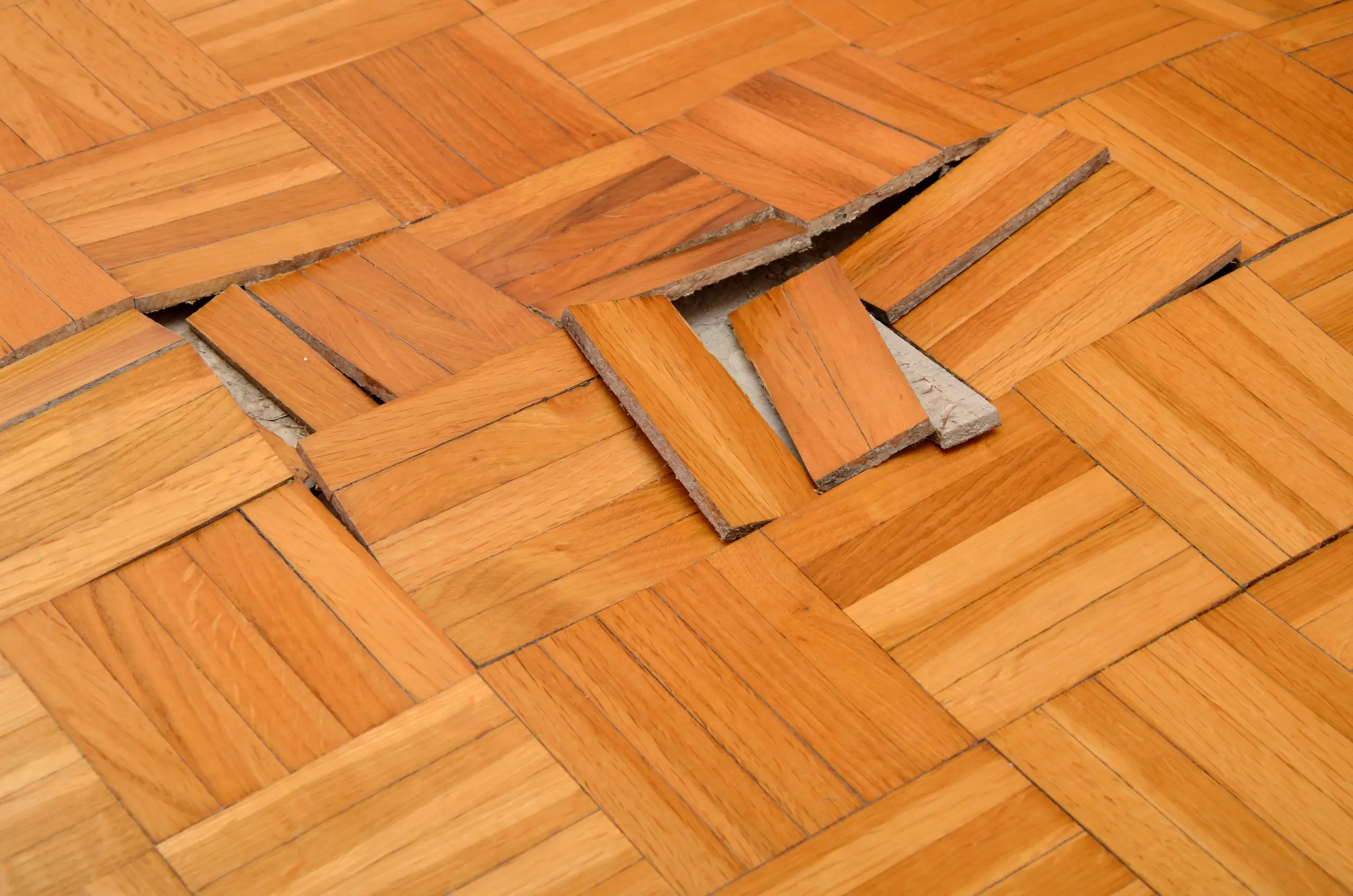
Insurance & Damage Restoration in West Michigan: close-up of buckled and displaced parquet flooring in need of repair.

Insurance & Damage Restoration

Helping restore floors after water, fire or other damage.

What's Involved in Restoring a Damaged Hardwood Floor?

Water, fire and storm damage can buckle, stain or warp a hardwood floor in ways that aren't always obvious at first glance. Every restoration starts with an honest assessment of how deep the damage goes — down to the subfloor if needed — before deciding what can be repaired and what replaced. Our guide to whether water-damaged floors can be saved explains what usually decides it, and salvageable floors are finished the same way as any refinishing project.

  1. Assess the Damage

    A full assessment of how deep the damage goes, subfloor included, before anything is decided.

  2. Document the Scope

    A written estimate of what is damaged, what can be saved, what has to be replaced, and what each costs — the clear scope an adjuster generally wants.

  3. Repair & Replace

    Repair where possible, replacement where it's not — new boards are laced into the existing floor so the rest of it can be saved.

  4. Sand & Finish

    The floor is sanded and refinished so the repaired area matches the rest of the room.

  5. Final Walkthrough

    We review the restored floor with you to make sure everything meets your expectations.

What to Expect

Every restoration starts with an assessment of the damage, followed by repair or replacement work, and a final walkthrough once the floor is restored.

Salvageable floors are sanded and finished as a refinishing project; where boards are past saving they are replaced and laced into the existing floor. Either way our process is the same, and the FAQ answers the questions that come up most while a claim is open.
Schedule a Consultation
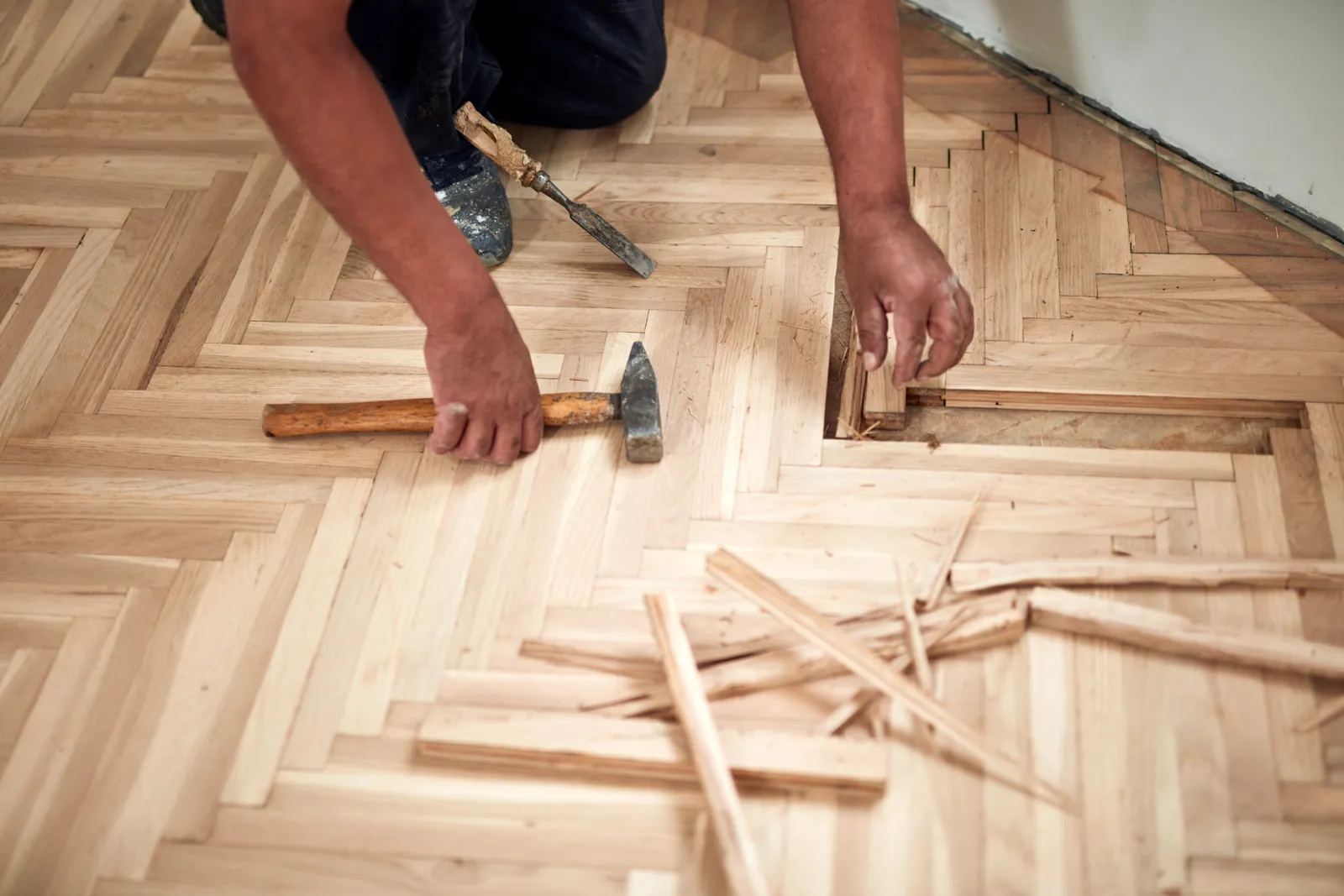
Insurance & Damage Restoration in West Michigan: a repair technician replacing damaged parquet boards by hand.

Frequently Asked Questions

Do you work directly with insurance adjusters and claims?

Insurance repair is regular work for us, and what an adjuster generally wants is a clear scope: what is damaged, what can be saved, what has to be replaced, and what each costs. That is what our written estimate sets out. Your policy and your carrier decide what is actually covered — we can document the floor, but we cannot approve a claim. Our process covers what happens once a scope is agreed.

Can water- or fire-damaged floors always be saved?

Not always, but more often than people expect. What matters most is how long the wood stayed wet and how far the damage went — surface staining is a different problem from boards that have cupped, and cupping sometimes settles as the floor dries. When the damage is confined to one area, a lace-in repair ties new boards into the existing floor and the whole thing gets sanded and refinished together, so the repair does not read as a patch. We will tell you honestly which one you are looking at — our guide to restoring water-damaged floors explains what usually decides it, and salvageable floors finish as a refinishing job.

How fast can you respond to damage?

Call us as soon as you find it. With water damage the first priority is not flooring at all — it is stopping the source and getting the space drying, because standing moisture is what turns a repairable floor into a replacement. Photograph everything before anything is moved; your carrier will want it and so will we.

Dealing With Damaged Floors?

Reach out today to get started.