Hardwood rarely fails all at once. It wears gradually, and most of the warning signs show up long before the wood itself is in trouble. Catching them early is usually the difference between a straightforward sand and refinish and a bigger repair.
1. Water soaks in instead of beading
Drip a few drops of water onto a well-used part of the floor. If they sit on top, the finish is still doing its job. If they darken the wood and soak in within a few minutes, the protective layer has worn through, and the bare wood underneath is taking every spill and every wet shoe directly.
2. Scratches have gone through the finish into the wood
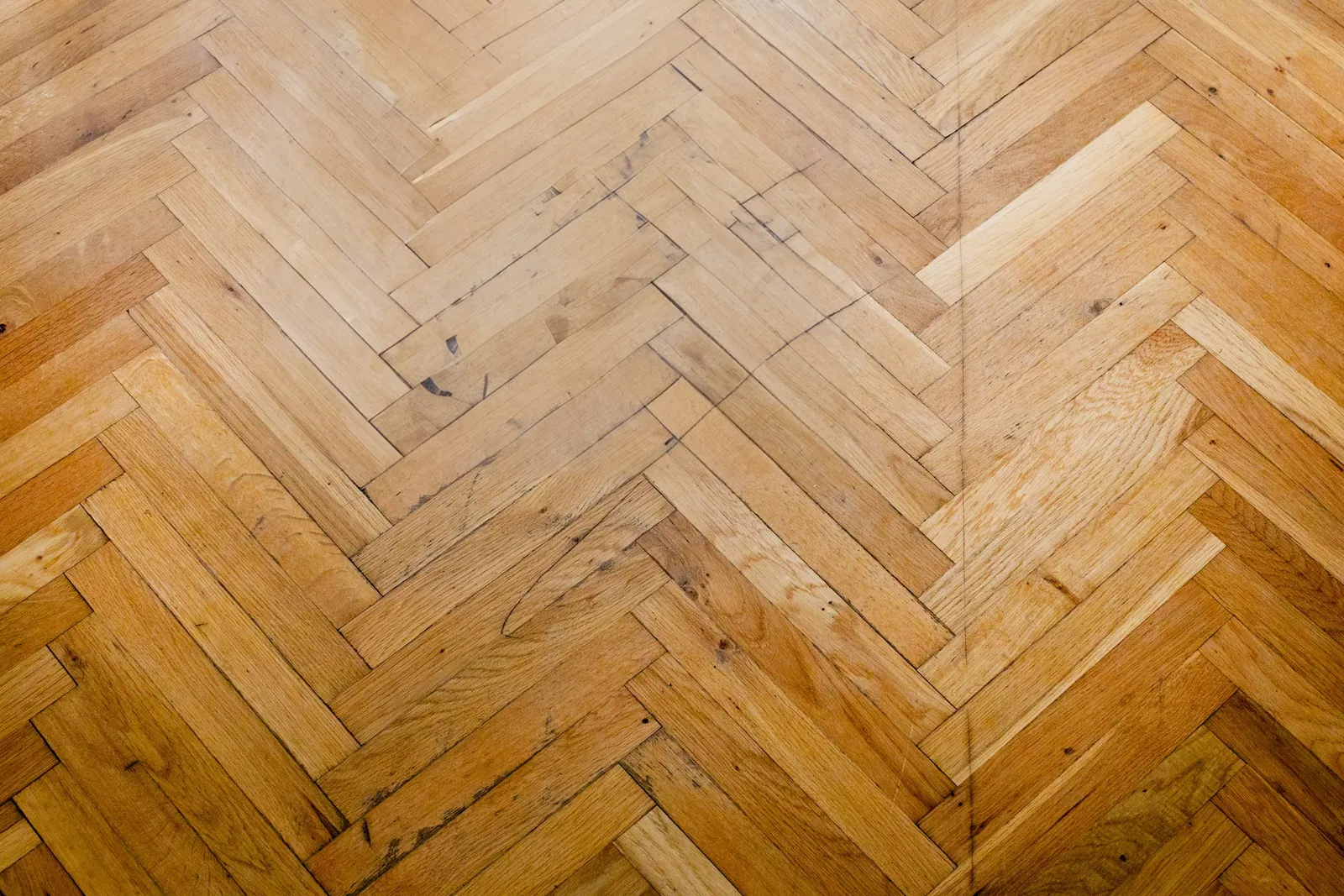
Light scuffs that only mark the finish can often be buffed out. Scratches that catch a fingernail, or that show pale, unfinished wood at the bottom, can’t — they need the floor sanded back below the damage and a new finish applied.
3. The color has turned grey or dull in the traffic lanes
Hallways, entryways and the path from the kitchen to the back door wear first. When those areas look noticeably greyer or flatter than the edges of the room, the finish there is gone and the wood is starting to weather.
4. Boards are cupping, gapping or squeaking
Edges that rise above the center of a board, gaps that have opened between boards, or squeaks that weren’t there before usually point to moisture or movement rather than surface wear. That’s worth having looked at before refinishing, because the cause needs addressing first — and if water was involved, our guide to restoring water-damaged hardwood explains what usually decides repair versus replacement.
5. There are stains, burns or damaged boards
Pet stains that have gone dark, burns, deep gouges and cracked or split boards don’t sand out on their own. Individual boards can be cut out and replaced with new ones laced into the existing floor, then sanded and finished along with the rest so the repair doesn’t stand out.
What to do next
One of these on its own might just mean a busy room. Two or three together usually means the floor is due. What to expect during the refinishing process walks through the job step by step, and you can schedule a consultation to have us look at your floor and tell you what it actually needs.